
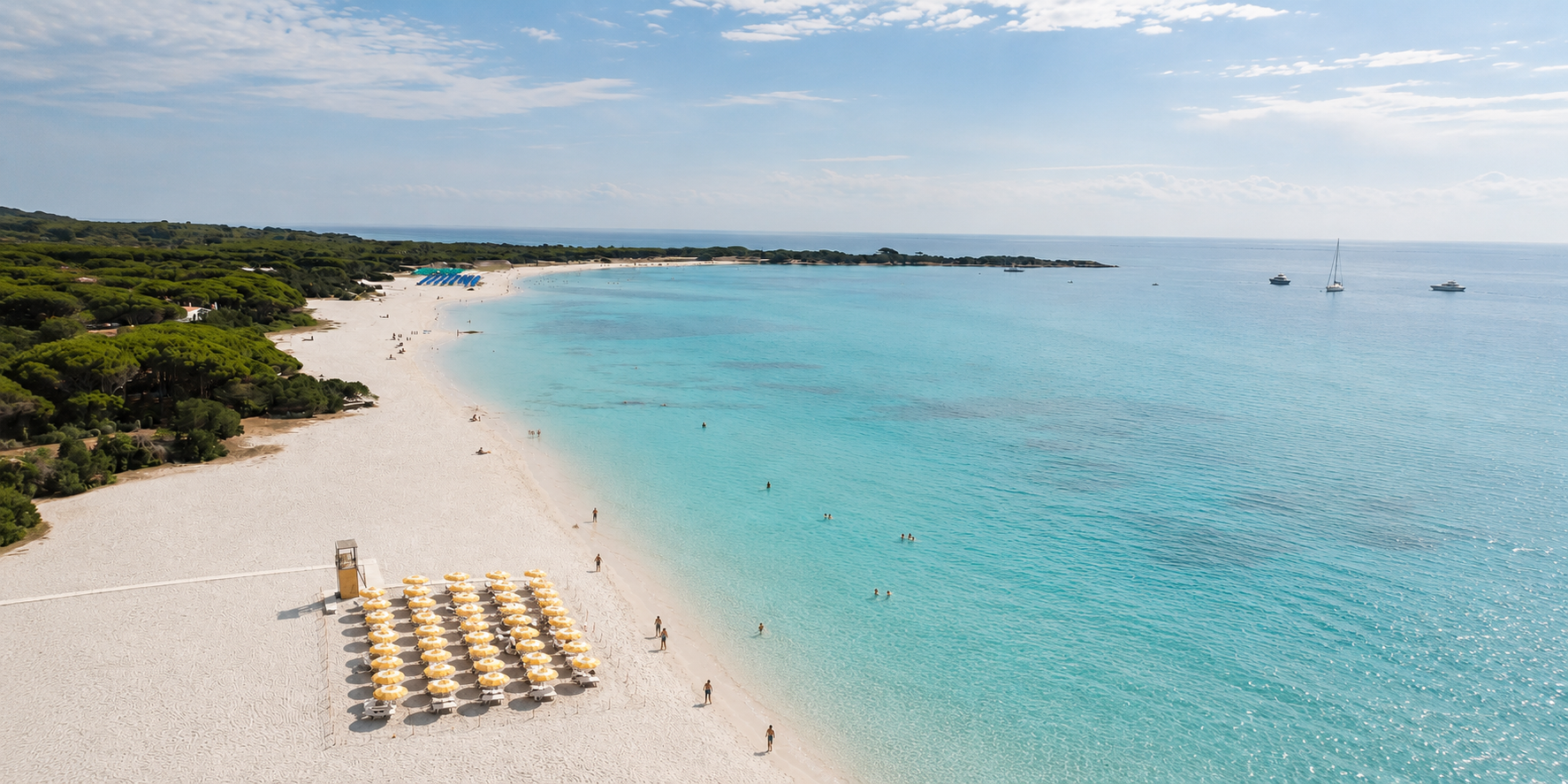
From the air, Sardinia reveals itself in gradients—turquoise shallows dissolving into deep Mediterranean blue, rugged limestone cliffs breaking into hidden coves. For European travelers, this Italian island feels both remote and remarkably accessible, a rare combination that has quietly positioned it as one of the continent’s most compelling coastal escapes.
Sardinia is served by three main airports—Cagliari in the south, Olbia in the northeast, and Alghero in the northwest—each well connected to major European hubs. Direct flights from cities like Paris, Milan, Rome, Barcelona, and London make the journey surprisingly frictionless, especially in summer when seasonal routes expand significantly. From Montréal or other North American gateways, a single connection through Rome or Milan gets you there within a day. What distinguishes Sardinia from other Mediterranean destinations is that this accessibility doesn’t come at the cost of overcrowding—once on the ground, the island still feels expansive, raw, and untamed.
The east coast, particularly around the Gulf of Orosei, is where Sardinia’s reputation crystallizes into something unforgettable. Cala Gonone, a small seaside village backed by steep mountains, serves as the ideal launch point. It’s here that the road quite literally ends, and the coastline begins to unfold in a way that can only be experienced by water.
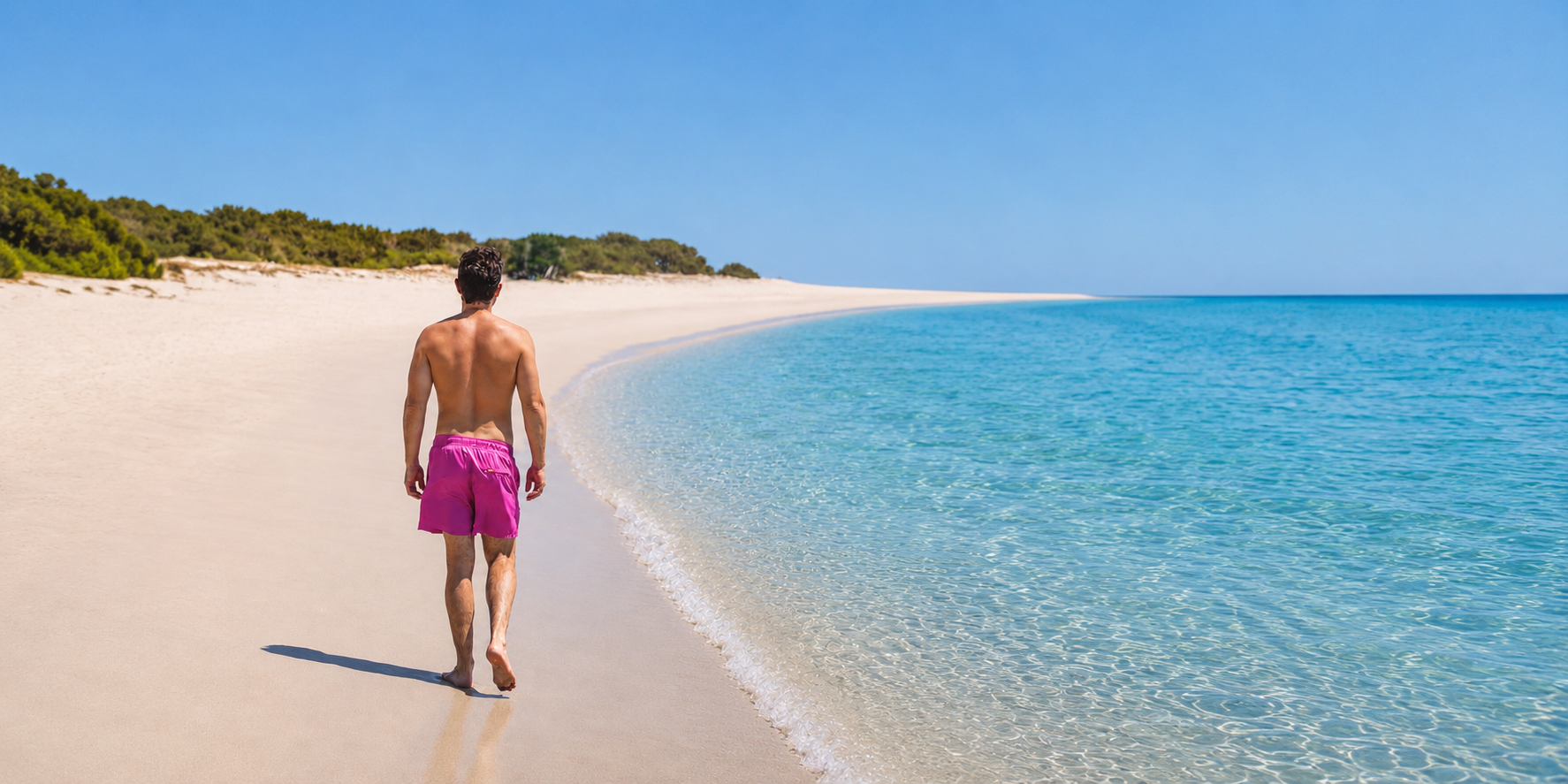
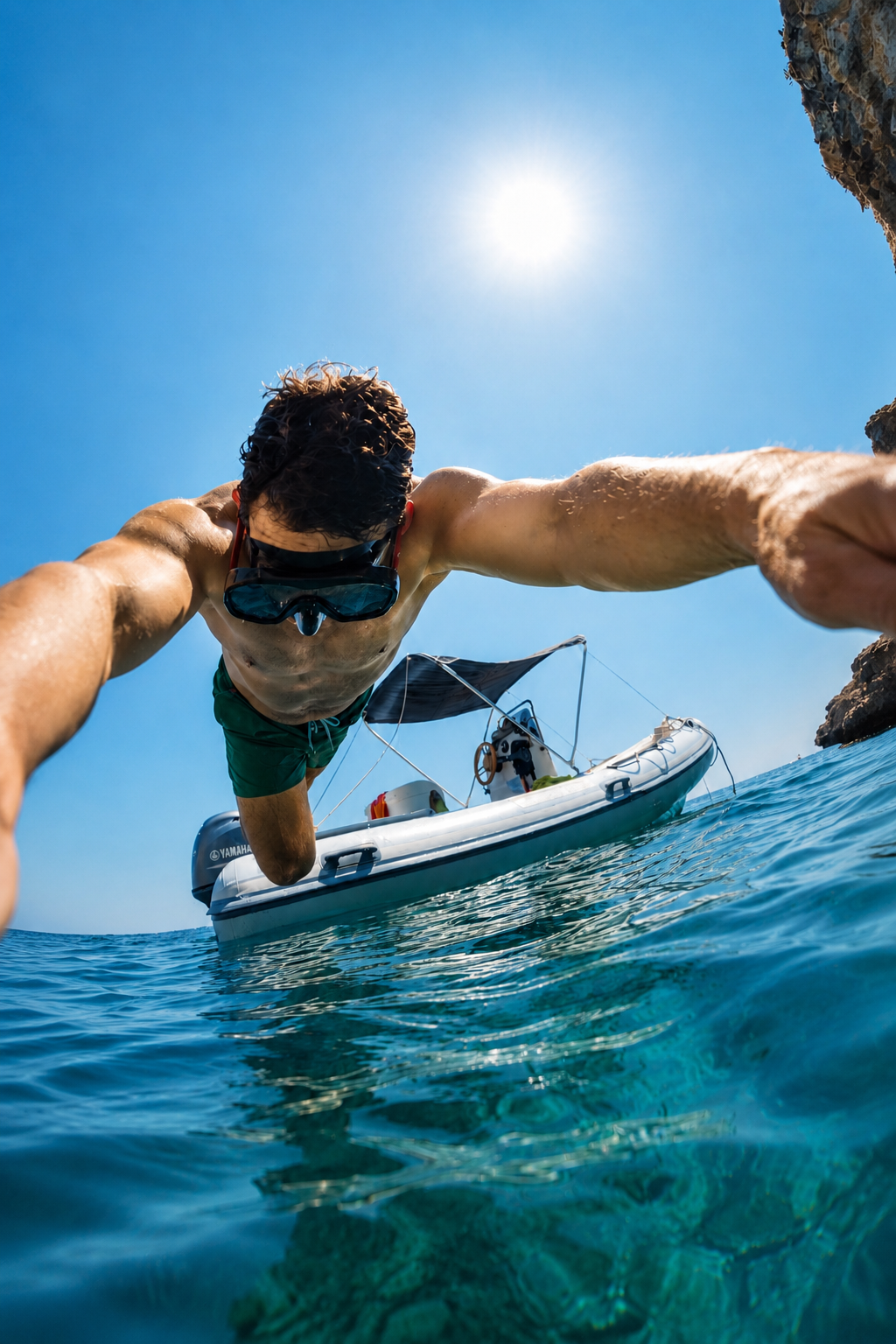
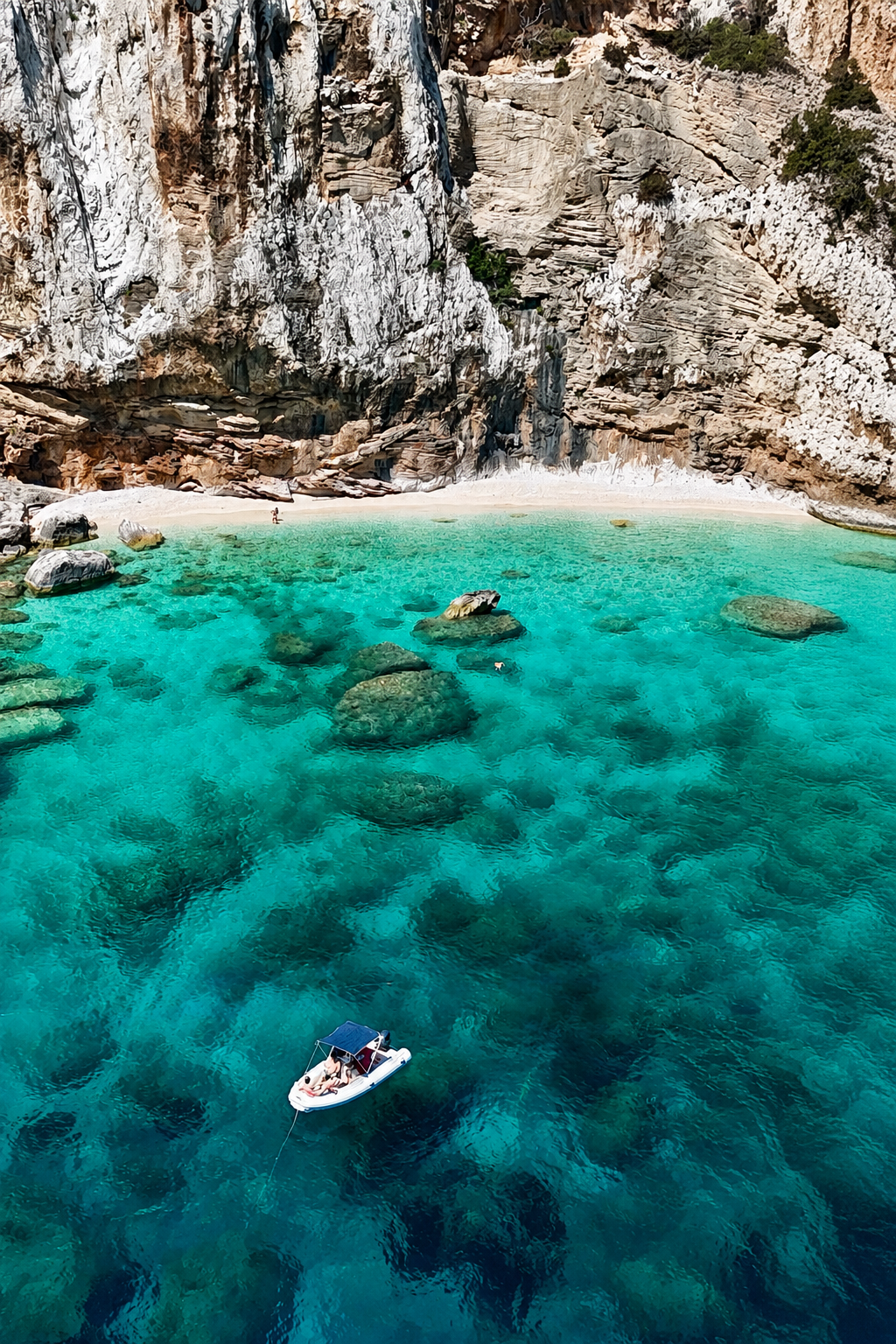
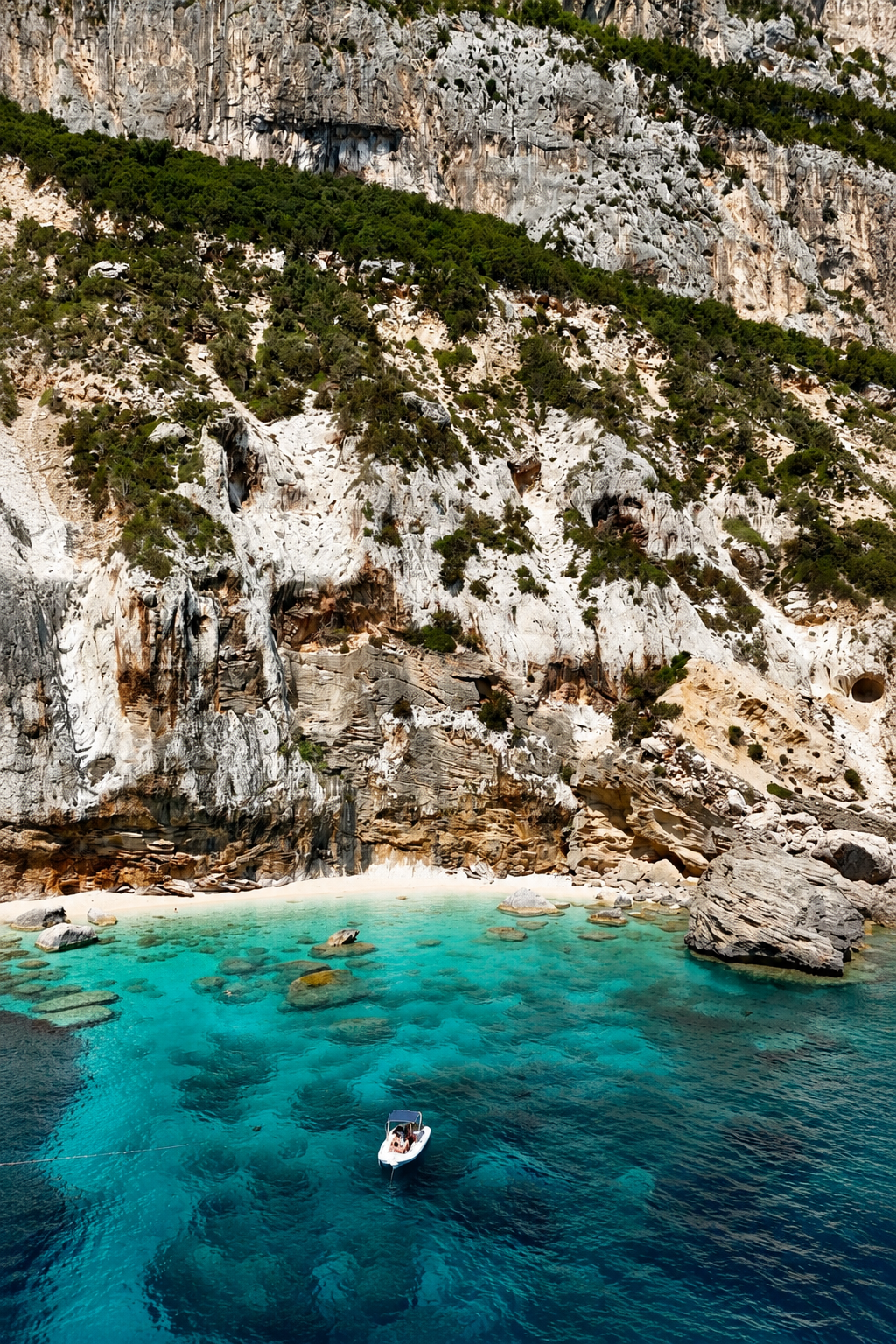
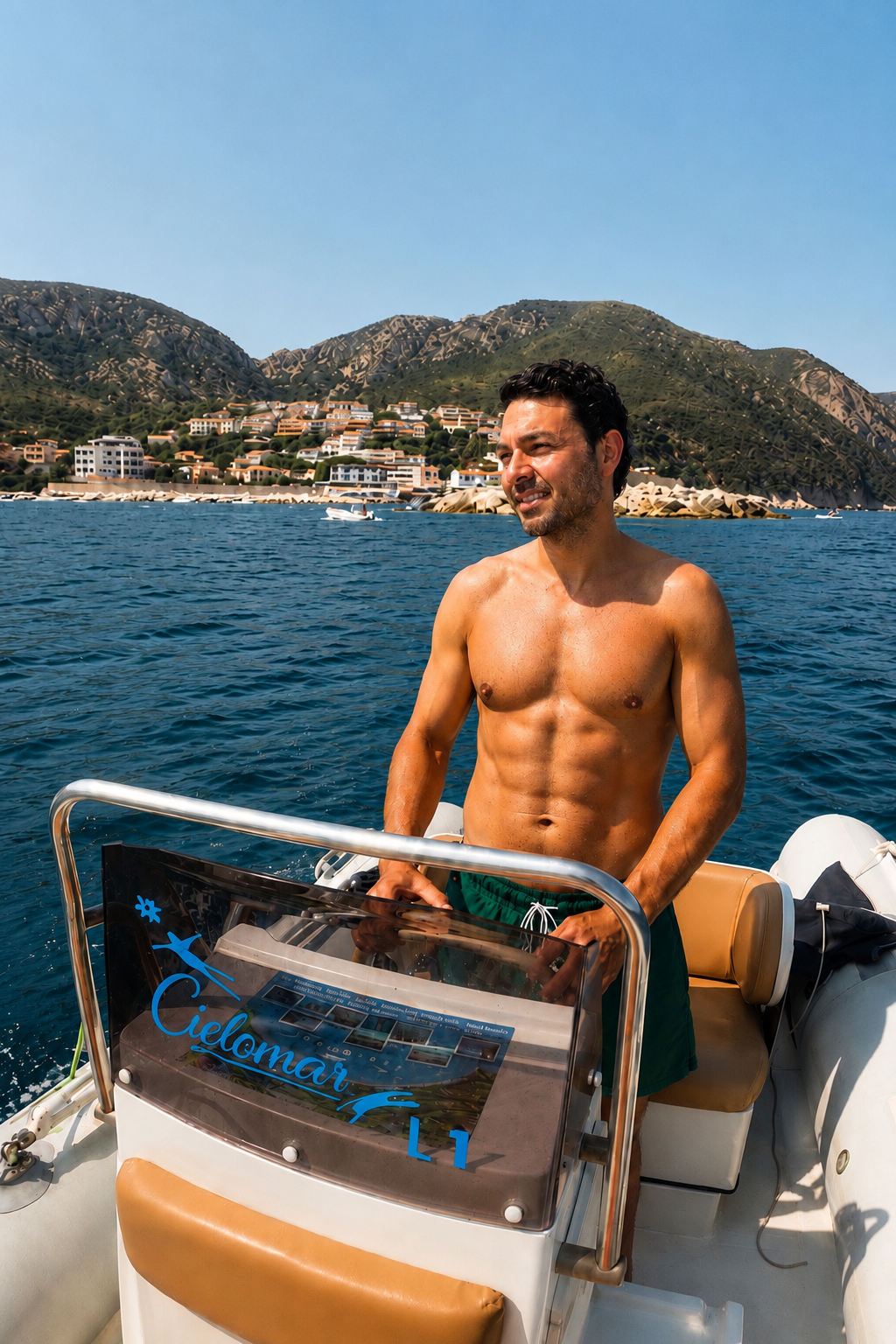
Renting a small motorboat in Cala Gonone is less of an activity and more of a rite of passage. No license is required for smaller vessels, and within minutes of leaving the marina, the perspective shifts entirely. The coastline stretches southward in a sequence of dramatic limestone cliffs punctuated by impossibly clear coves—Cala Luna, Cala Mariolu, Cala dei Gabbiani, and the iconic Cala Goloritzé. Each beach feels distinct, yet all share the same crystalline water that shifts between shades of emerald and electric blue depending on the light.
What makes this stretch of coast exceptional isn’t just its beauty, but its inaccessibility by land. Many of these beaches require hours of hiking to reach, which keeps them relatively untouched even in peak season. By boat, however, you can anchor just offshore, dive into warm, transparent water, and swim to beaches that feel almost private. The experience is cinematic: cliffs towering overhead, the scent of salt and wild herbs in the air, the hum of the engine fading into silence as you drift.
There’s a rhythm to a day on the water here. Early departure to beat the midday heat, anchoring in secluded coves for swims and photography, and long pauses where time seems suspended. For photographers and content creators, the Gulf of Orosei is a playground of textures—white limestone, cobalt water, and dense Mediterranean vegetation clinging to vertical rock faces. The light, especially in late afternoon, softens the landscape into something almost surreal.
Back on land, Sardinia’s identity reveals itself through its gastronomy, which is deeply rooted in both sea and countryside. Unlike mainland Italy, Sardinian cuisine carries a distinct character shaped by centuries of isolation and pastoral traditions.
Along the coast, seafood dominates menus with a simplicity that lets the ingredients speak. Grilled fish—often sea bream or sea bass—arrives dressed with little more than olive oil, lemon, and sea salt. Spaghetti alle vongole is a staple, but in Sardinia it feels fresher, more immediate, as if the clams were pulled from the water moments before. Bottarga, cured fish roe often shaved over pasta, adds a briny intensity that reflects the island’s maritime heritage.
Further inland, the cuisine shifts dramatically. Sardinia is known for its pastoral roots, and dishes like porceddu—slow-roasted suckling pig—are central to its culinary identity. Cooked over open flame and seasoned with local herbs, it’s rich, tender, and deeply flavorful. Pane carasau, a thin, crisp flatbread originally made for shepherds, appears at nearly every meal, often served with pecorino cheese produced from the island’s abundant sheep farms.
Wine culture here is equally compelling. Cannonau, a robust red believed to be one of the oldest grape varieties in the Mediterranean, pairs naturally with the island’s hearty dishes. Vermentino, on the other hand, is crisp and mineral-driven, perfectly suited to long lunches by the sea. Many small producers offer tastings that feel intimate and unpretentious, a refreshing contrast to more commercial wine regions.
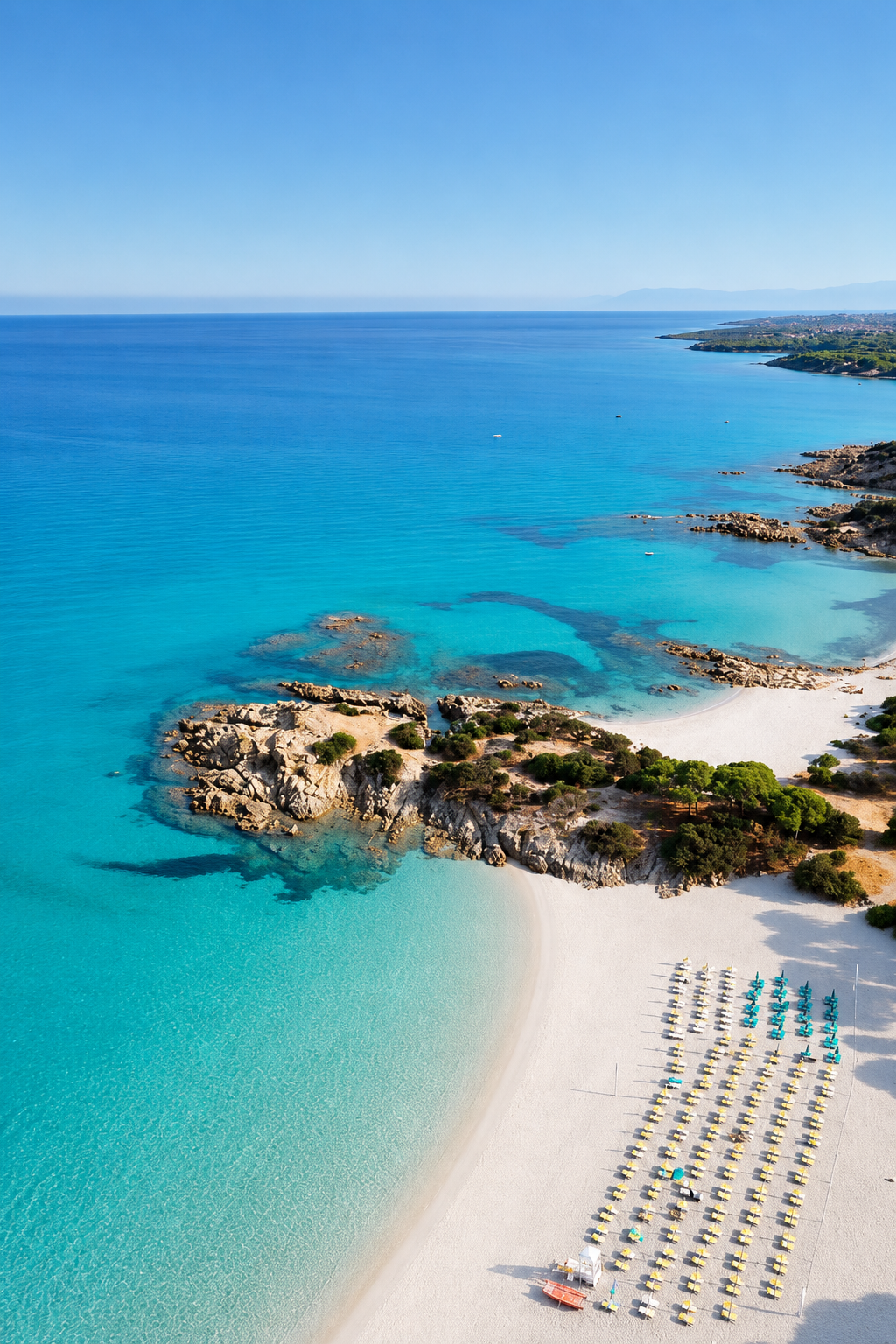
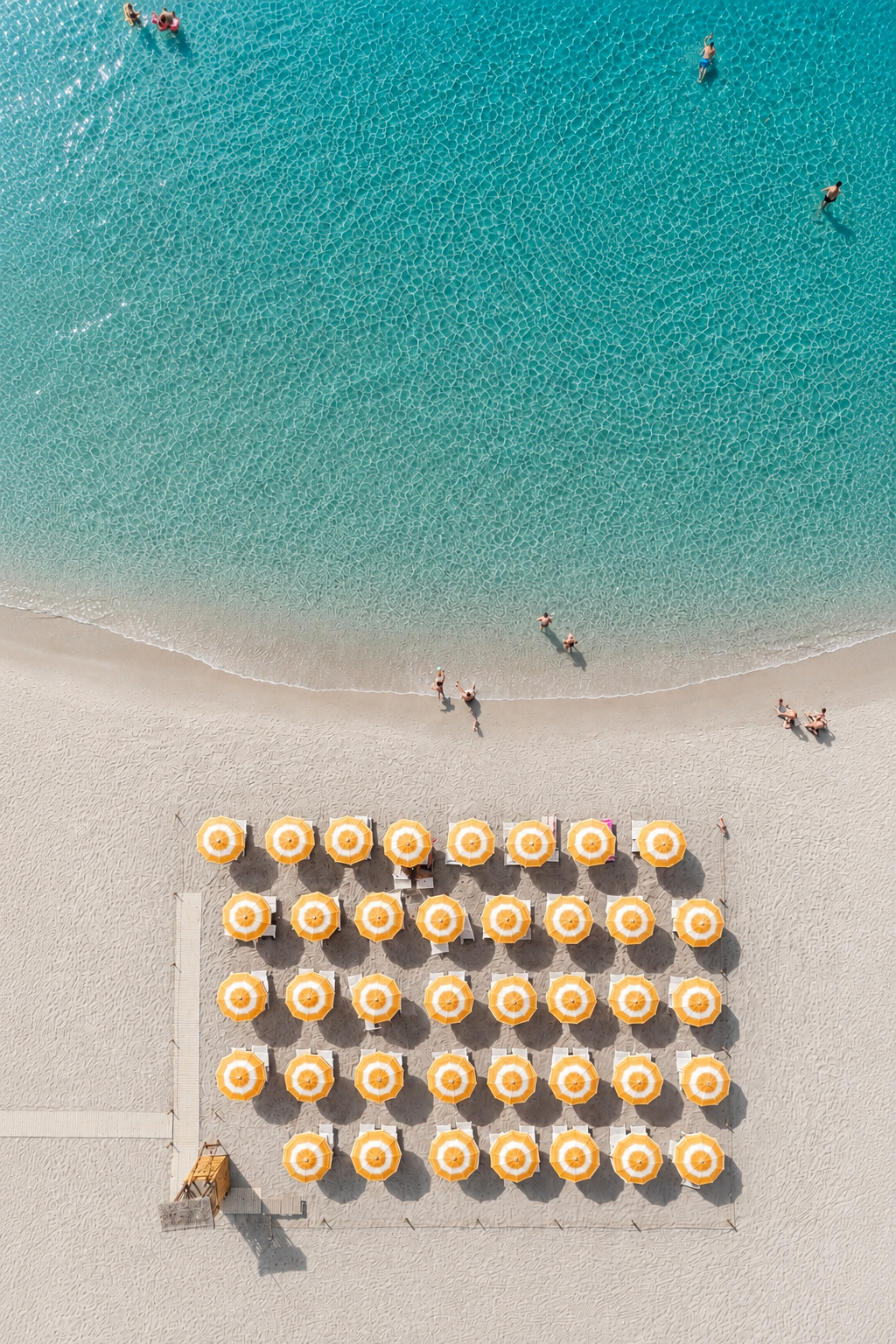
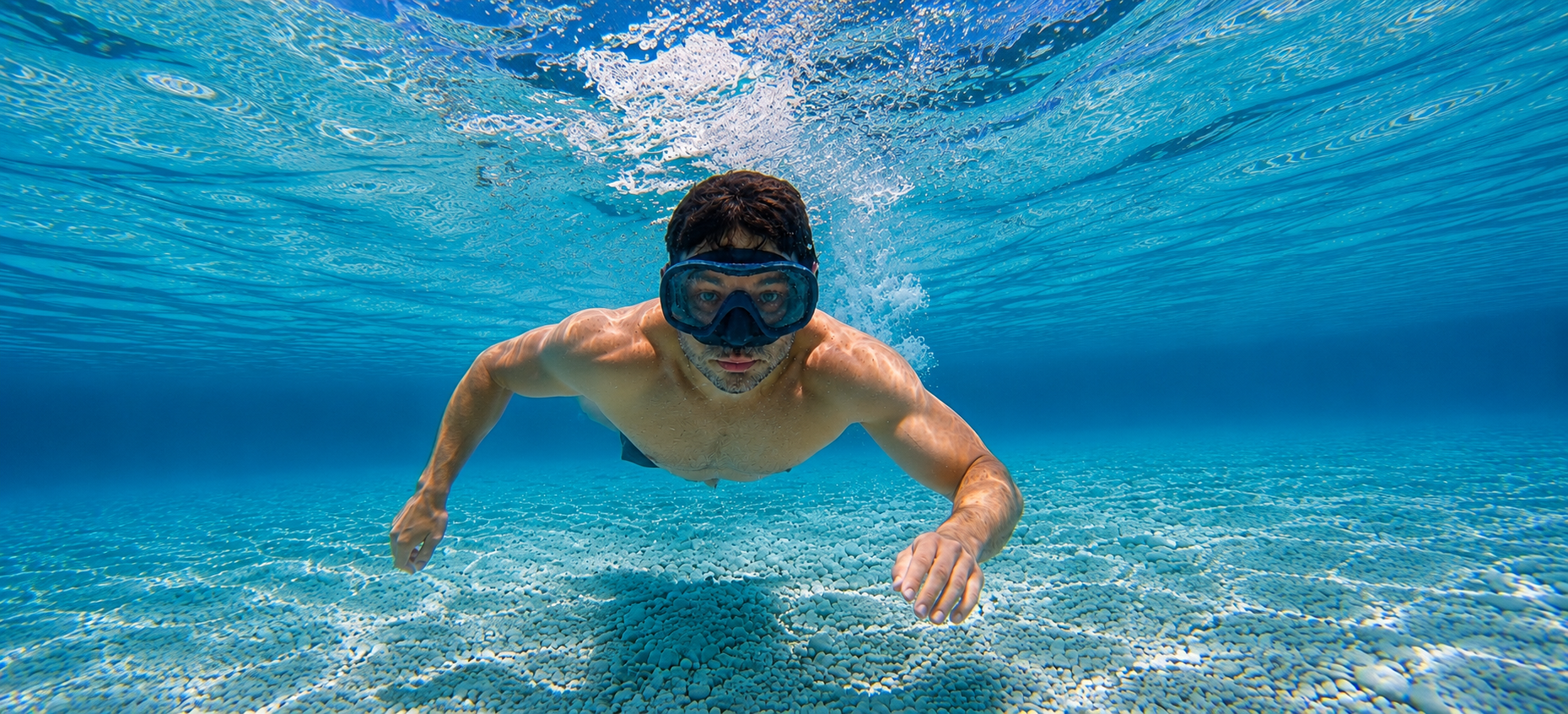
What stands out most about Sardinia is its balance. It offers the visual drama and water clarity of more famous Mediterranean destinations, yet retains an authenticity that feels increasingly rare. There are no sprawling beach clubs dominating every cove, no overwhelming sense of commercialization. Instead, there’s space—to explore, to slow down, and to experience the island on your own terms.
For travelers coming from across Europe or beyond, Sardinia delivers a rare promise: ease of access without compromise. And for those willing to venture beyond the airport and onto the water, particularly along the coast of Cala Gonone, it reveals itself as something far more than a destination—it becomes an experience defined by movement, light, and the quiet luxury of untouched landscapes.
Travel support provided by Tourism Sardinia. Outfits featured in this story are available at Bikini Village.